Chaos Creates Opportunity: Kane Hsieh on Building a Venture Firm That Stands Out

Kane Hsieh of Root Ventures shares how emerging fund managers can build a competitive edge, embrace disruption, and use AI without losing investor judgment.
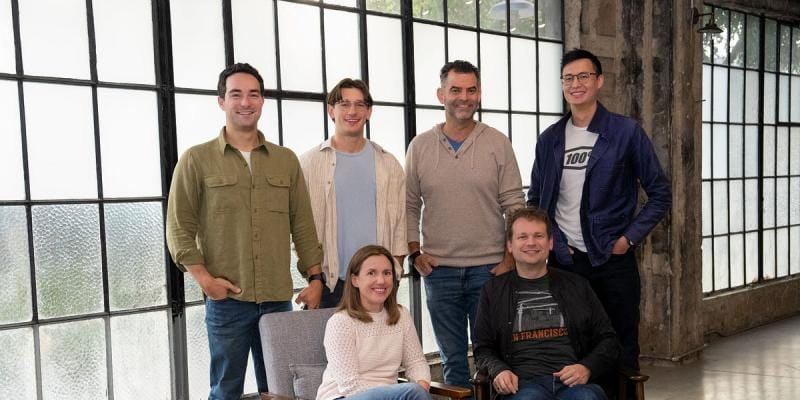
Most investors spend their careers trying to reduce uncertainty. Markets mature, business models stabilize, and risk becomes easier to understand.
Kane Hsieh sees venture capital differently.
"Chaos is good."
That simple statement captures Root Ventures' investment philosophy. Rather than waiting for markets to settle, the firm looks for moments when industries are being reshaped. Those periods create uncertainty, but they also create the biggest opportunities for founders—and for investors willing to think differently.
Since its founding, Root Ventures has grown into a nearly $200 million firm by backing technical founders building everything from developer tools to advanced manufacturing and aerospace technologies. Throughout the conversation, Kane shares what gives venture firms an edge, why disruption creates opportunity, and how emerging managers can build differentiated funds in an increasingly competitive market.
1. Every Great Venture Firm Needs an Edge
Ask an emerging manager what they're raising, and they'll usually tell you the size of the fund.
Ask Kane what matters most, and he'll ask a different question:
Why should founders choose you?
That's the question every venture firm has to answer.
For Root Ventures, the answer starts with focus. Every partner comes from an engineering background, the firm invests in only six to eight companies each year, and it primarily backs highly technical founders tackling difficult engineering problems. Rather than trying to be everything to everyone, Root has built its reputation around one type of founder it understands exceptionally well.
That focus also shapes how the firm sources deals.
Many investors first meet founders after a company has a polished pitch deck and an active fundraising process. Root tries to meet founders much earlier.
As Kane explains, "If it's in the open market, if there's a deck, we're already a little behind." Instead of competing once every investor knows about a company, the team spends time inside technical communities where new ideas first emerge. Their office includes a machine shop and electronics workbench, and even their website was built in-house because they wanted it to reflect the engineers they hoped to work with.
For emerging managers, there's an important lesson here.
Differentiation isn't just about having a unique investment thesis. It's about becoming genuinely valuable to a specific type of founder.
When Nathan asks Kane what advice he'd give first-time fund managers, his answer is remarkably simple:
"Have a pitch for why you have alpha or why you have an edge."
LPs aren't looking for another venture fund.
They're looking for a manager whose network, expertise, or perspective can't easily be replicated.
2. Great Investors Don't Wait for Certainty
Venture capital has always rewarded investors who see opportunities before everyone else.
That's why Kane believes disruption should be embraced rather than feared.
While many investors worry that technologies like AI will make existing businesses obsolete, Root views periods of change as the moments when entirely new categories emerge.
As Kane puts it, "Chaos is good for us."
History supports that view.
Every major technological shift—from the internet to cloud computing and now AI—has created uncertainty before producing category-defining companies. The biggest venture returns rarely come from betting on markets that already look obvious. They come from recognizing new opportunities while the rest of the industry is still trying to understand them.
Root is already seeing that happen. After years in which software dominated venture investing, the firm is increasingly excited by areas like robotics, advanced manufacturing, engineering software, and industrial technology, where advances in AI are creating entirely new possibilities.
One phrase hangs on Root's office wall:
"Adapt or die."
Another:
"Only the paranoid survive."
They're reminders that venture capital isn't about predicting a stable future.
It's about continually adapting as technology changes.
As Kane says, "Every once in a while you've got to shake the snow globe." The firms that consistently outperform are often the ones willing to rethink old assumptions before everyone else does.
3. Raising a Venture Fund Isn't That Different from Raising For a Startup
Toward the end of the conversation, Nathan asks Kane what advice he'd give emerging managers raising their first institutional fund.
His answer has little to do with fundraising tactics.
Instead, he points out that raising a venture fund is surprisingly similar to raising venture capital as a founder.
Founders often struggle to get warm introductions, earn investor trust, and stand out in a crowded market. Emerging managers face the same challenge with LPs. Relationships matter, reputation matters, and access is rarely immediate.
Rather than seeing that as a flaw in the system, Kane sees it as part of the process.
"Getting the intro is the first test," he says.
Building a fund requires the same skills LPs expect you'll use when investing: developing relationships, earning credibility, and finding opportunities that others miss.
One quote captures that idea perfectly:
"Information asymmetry is so powerful... figuring out how to access opportunities that others don't see is the first test that you can find asymmetric information."
The goal isn't simply to raise capital.
It's to demonstrate that your network, sourcing ability, and perspective give you access to opportunities other managers won't see.
4. AI Changes the Workflow, Not the Job
Like many venture firms, Root Ventures has embraced AI throughout its investment process.
The team uses it for research, sourcing, coding, and other repetitive tasks, allowing investors to spend less time gathering information and more time evaluating it. Kane even jokes that if someone is doing routine work at a keyboard, the first question should be whether it can be "solved by tokens."
But he draws a clear line between automation and investing.
AI can summarize markets, analyze data, and accelerate research.
It can't replace judgment.
As Kane explains, the final investment decision still depends on conviction, experience, and having a differentiated point of view. As AI tools become available to every investor, access to information becomes less of a competitive advantage. The real edge comes from interpreting that information better than everyone else.
Technology will continue changing how venture firms operate.
It won't change why the best investors win.
Final Thought
Throughout the conversation, Kane returns to one idea again and again: venture capital rewards differentiated thinking.
The firms that consistently outperform aren't simply the ones with the biggest funds or the strongest brands. They're the ones with a clear edge, a unique perspective, and the conviction to invest before consensus forms.
For emerging managers, that's perhaps the biggest takeaway.
Your success won't come from copying established firms.
It will come from building a fund that offers something founders and LPs can't easily find anywhere else.